

 Summer dealsCamp & Hike clearance






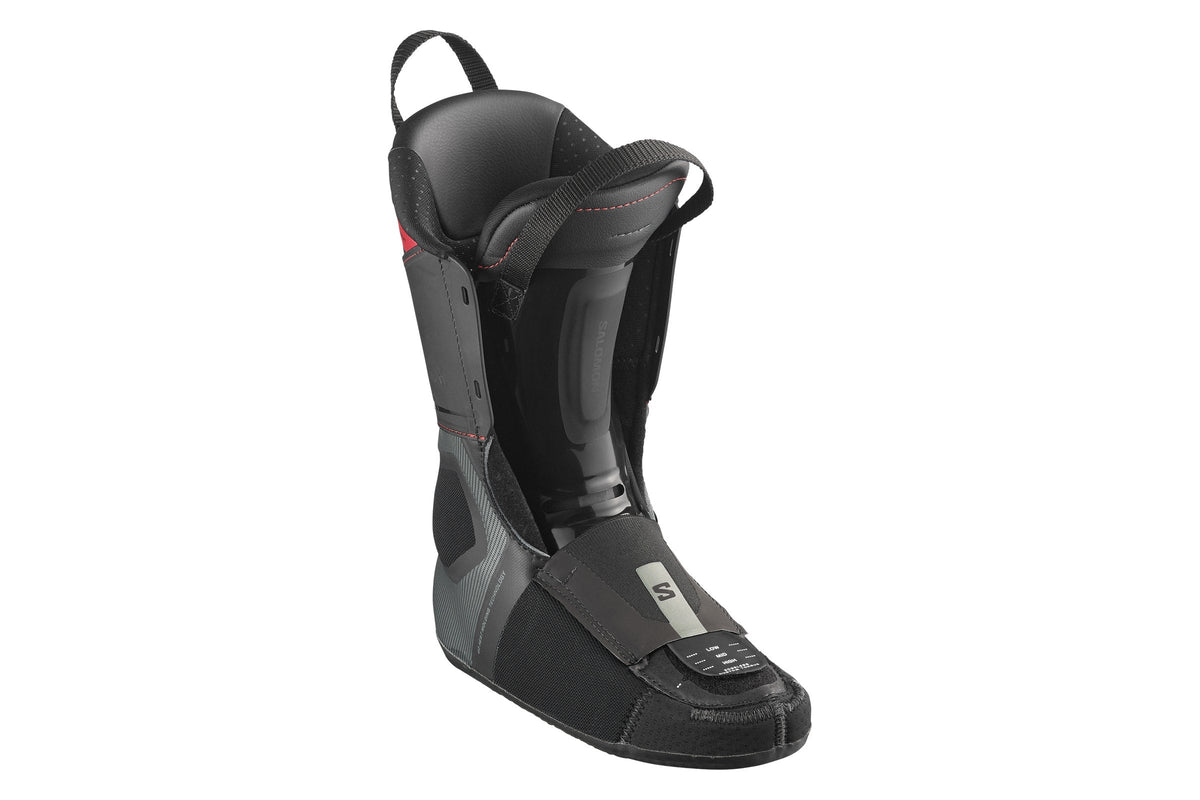
Ski boots are sized in Mondopoint, which is your foot length in centimetres, and rated by flex, which is how hard the boot is to bend forward. Most intermediate skiers fit a flex of about 80–100 in their Mondo size, with a medium last of about 100 mm. This guide matches our Find my boot size tool.
What Mondo size means
Mondopoint, or Mondo, is the length of your foot in centimetres. A 27.5 cm foot starts in a 27.5 boot. Boot shells usually come in full-centimetre steps, so a 27.0 and a 27.5 often share the same shell with a different liner or footbed.
To measure, stand on a sheet of paper against a wall, mark the tip of your longest toe, and measure from the wall to the mark. Measure both feet and use the longer one. Round up to the next half size.
As a rough guide, Mondo is your US men’s shoe size plus 18, or your US women’s size plus 17.
| Mondo | Foot length | US men’s | US women’s | EU |
|---|---|---|---|---|
| 22 | 220 mm | 4 | 5 | 35 |
| 22.5 | 225 mm | 4.5 | 5.5 | 35.5 |
| 23 | 230 mm | 5 | 6 | 36 |
| 23.5 | 235 mm | 5.5 | 6.5 | 37 |
| 24 | 240 mm | 6 | 7 | 37.5 |
| 24.5 | 245 mm | 6.5 | 7.5 | 38 |
| 25 | 250 mm | 7 | 8 | 39 |
| 25.5 | 255 mm | 7.5 | 8.5 | 40 |
| 26 | 260 mm | 8 | 9 | 40.5 |
| 26.5 | 265 mm | 8.5 | 9.5 | 41 |
| 27 | 270 mm | 9 | 10 | 42 |
| 27.5 | 275 mm | 9.5 | 10.5 | 42.5 |
| 28 | 280 mm | 10 | 11 | 43 |
| 28.5 | 285 mm | 10.5 | 11.5 | 44 |
| 29 | 290 mm | 11 | 12 | 44.5 |
| 29.5 | 295 mm | 11.5 | 12.5 | 45 |
| 30 | 300 mm | 12 | 13 | 46 |
| 30.5 | 305 mm | 12.5 | 13.5 | 46.5 |
| 31 | 310 mm | 13 | 14 | 47 |
| 31.5 | 315 mm | 13.5 | 14.5 | 47.5 |
| 32 | 320 mm | 14 | 15 | 48 |
Ski boot flex by level
Flex is a number printed on the boot, usually from about 60 to 130. A lower number bends forward more easily; a higher number is stiffer and transfers more power to the ski. Flex is not standardized between brands, so a 100 from one brand can feel different from a 100 from another.
| Level | Ski boot flex | What it suits |
|---|---|---|
| Beginner | about 60–80 | Learning, slower speeds, comfort first |
| Intermediate | about 80–100 | Linked turns on groomers, all-day comfort |
| Advanced | about 100–120 | Faster skiing, steeper terrain, more control |
| Expert | 120 and up | Hard charging, racing, aggressive freeride |
Women’s boots in the same category are often rated about 10–20 points softer, because a lighter skier bends a boot less. Heavier or taller skiers can go one step stiffer; lighter skiers one step softer.
Last width: narrow, medium or wide
The last is the width of the boot at the forefoot, in millimetres, measured on a reference size of about 26.5.
- Narrow, about 97–98 mm: low-volume feet; snug and precise.
- Medium, about 100 mm: fits most feet.
- Wide, about 102–104 mm: wide forefoot or high volume; more comfort.
A boot that is too wide lets your foot move, which costs control and causes rubbing. A boot that is too narrow pinches. A fitter checks width with your foot in the shell.
Comfort fit or performance fit
A comfort fit leaves about a finger of space behind the heel in the empty shell, suits most recreational skiers and keeps feet warmer. Advanced and expert skiers often go half a size snugger for a quicker response. Liners pack out over the first days on snow, so a new boot should feel snug, with toes lightly touching the front when you stand straight and pulling back when you flex.
Boot soles and bindings
Check the sole before you pair boots and bindings. Alpine (ISO 5355) soles fit standard alpine bindings. GripWalk soles have a rockered, rubber tread for walking and need a GripWalk-compatible binding, usually marked GW or MNC. Touring (ISO 9523) soles need touring or multi-norm bindings.
Get them fitted
Boot fitting is free with boots you buy from Borderline Outdoor. A fitter measures both feet, checks the shell, heat-moulds the liner where the boot allows it, and can add a Sidas footbed. Our Richmond Hill flagship is the main fitting centre. Read how boot fitting works or shop ski boots.
Ski boot sizing questions
Should I buy ski boots in my shoe size?
No. Buy by Mondo, your foot length in centimetres. Street shoes are often a half to a full size longer than your foot.
What flex should a beginner ski boot be?
About 60–80. A softer boot is easier to flex and more comfortable while you learn.
Do ski boots get bigger as you wear them?
The liner packs out over the first days on snow, so the boot feels a little roomier. The shell does not stretch, which is why the shell size matters most.